
Fear, food, and what we’re facing: A letter from Spoonfuls’ CEO, Ashley Stanley
Just about a year ago, with new federal threats to our food system and safety net looming, I addressed a letter to the Spoonfuls community in response to a question I still hear a lot: “What can I do?” In the time since, the threats (and the severity of those threats) to our food system, our safety net, our communities, our neighbors, and our democracy have increased. They’ve turned to violence and death in incident after high profile incident, plus the many that never make headlines but still have bearing on how we show up in the world and for one another. So while, at the time, I said and I meant it, “You can do a lot, actually,” these days I’d say: If you can do something, you must.
Hateful, dishonest rhetoric, ill-conceived public policy, and federally sanctioned violence have concrete implications that extend beyond the immigrant community, beyond undocumented people, beyond deportees, and beyond protesters to each and every last one of us who just wants to live in a safe community. Where people can leave their homes. Where children can go to school. Where adults can go to work. Where friends can gather. Where anyone who wants to can peacefully assemble. Where those who need to can access resources in times of crisis and without fear.
But, increasingly, I know this isn’t the case. I know that neighbors (including legally present immigrants and American citizens afraid of being targeted) are hungry at home, no longer able to access the resources they need in times of crisis and without fear.
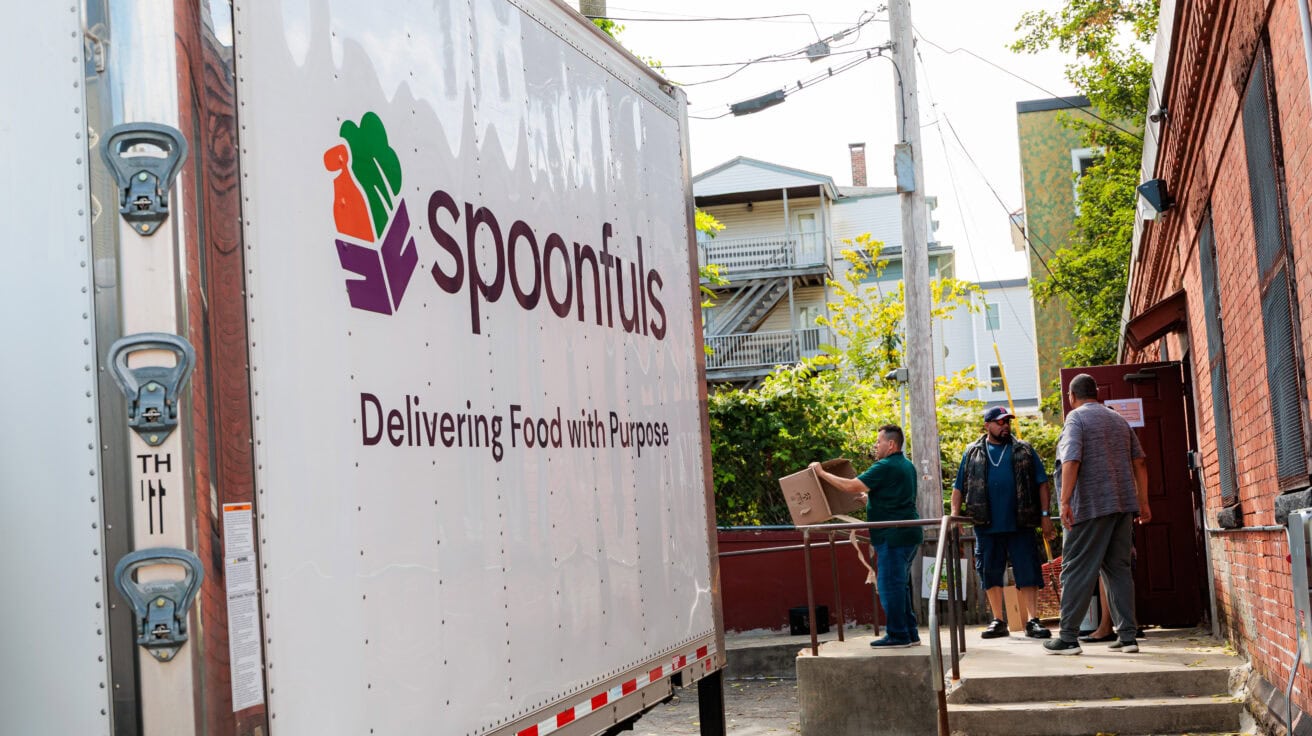
For the past 16 years, I’ve been at the helm of the food recovery organization, Spoonfuls, which sources excess and unsold food from retailers and brands and distributes it through a network of food programs across Massachusetts (pantries, meal programs, shelters, afterschool programs, and more). My team and I are close to the stories…stories of people who are foregoing the food they need to live because they don’t want to put themselves or their families in danger. Because they don’t want to die.
We see this reflected in quantitative data about the numbers of people our partners serve week to week, too. We see it in our own operations: The program that serves hundreds of families one week serves dozens the next after reports of ICE in the neighborhood. Another program sees clients coming from different neighborhoods because they no longer feel safe showing up to the meal program down the street. A long and loyal pantry volunteer wonders whether she’s doing more harm than good by staying open…if by assembling people she puts them at risk.***
That’s where we are now. Where we are is not normal. Where we are is unthinkable.
As an organization, we were built to be responsive to a need for food – a need that transcends race, religion, sexual orientation, immigration status, and politics. And, as individuals, as neighbors, as humans, we show up. That means being there for our teammates with protocols to keep them safe on the road and in the community, helping them carry the load: the physical load of thousands of pounds of food each day and the “load” of fear…knowing that, just by virtue of the work we do, it’s possible to draw attention to those most vulnerable. It’s physically showing up when and where we say we will, to the best of our ability. And it’s speaking up for our food system and those who need us now.
I implore you, if you can (and because if you can, you must): Do something. Anything.
- Speak out. From calling your U.S. Congressperson to raising awareness in your network about the issues, you can use your voice. If you need a starting point, check out Spoonfuls’ Advocacy Toolkit. Many of the examples are food oriented, but the information is applicable to all issues.
- Stay informed. As one option, our Breaking Through the Noise blog tracks the impact of federal policy on local people.
- Donate funds. To Spoonfuls and to other organizations addressing the issues you care about.
- Donate your time. Many organizations providing critical community resources like food, housing, and more, utilize volunteers to make their work happen. You can be a part of it.
- Check in with your community. Neighbors, family, friends. See how the people in your life are feeling and make space for them.
If not us, who? If not now, when? If not something, there is nothing.
In solidarity,
Ashley Stanley
Founder & CEO
Spoonfuls
***These include over 250 food and social service programs across the Commonwealth. You may notice our full list of beneficiary partners is no longer publicly listed. It is available by request.