
People of Spoonfuls: Cooper Anderson, Food Recovery Coordinator
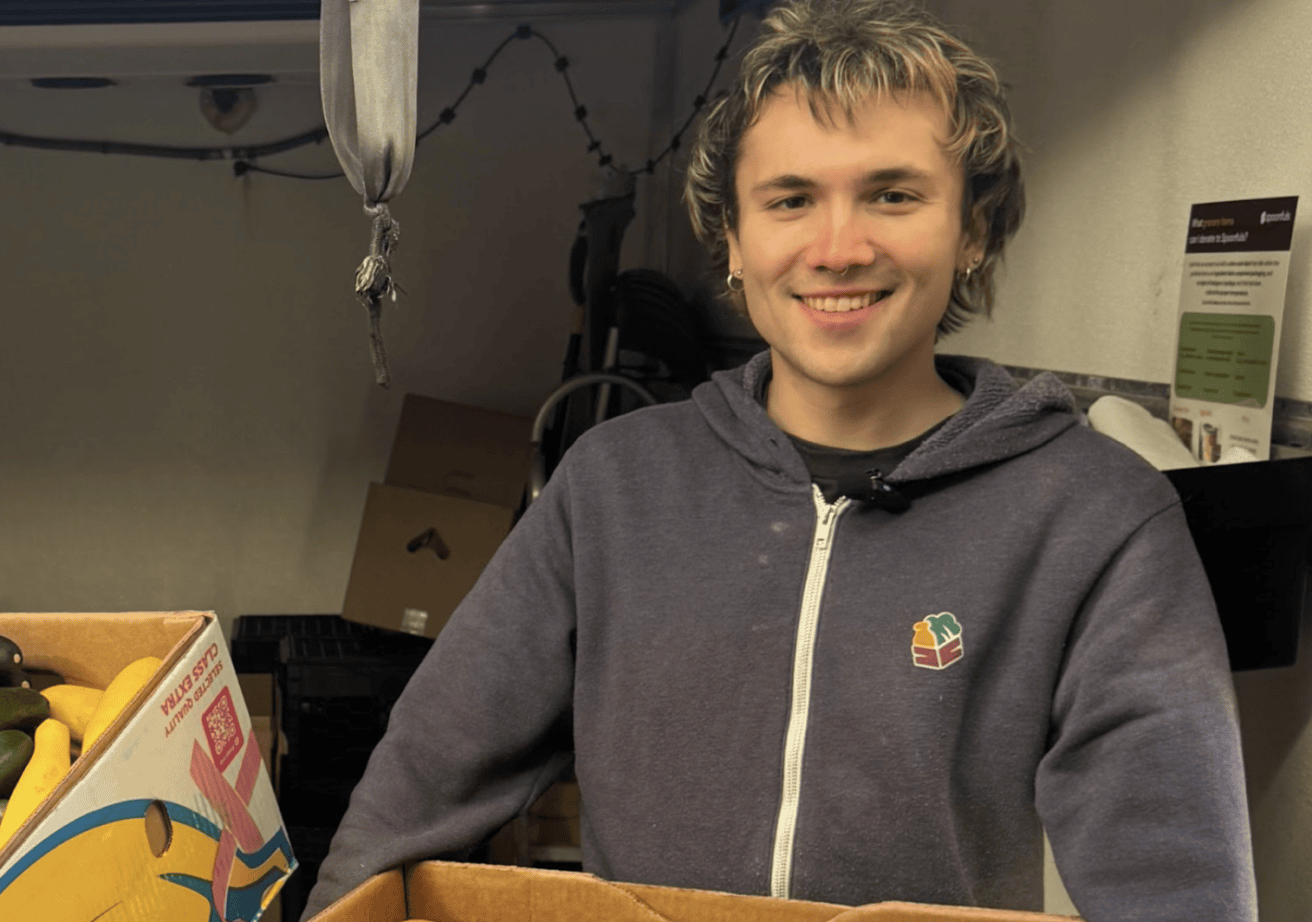
Food recovery doesn’t happen in isolation. It takes a community of food donors, community-based organizations, funders, and committed food recovery staff to help make the most of food while it’s still good to eat and get it to those who could use it. In “People of Spoonfuls,” we introduce you to the many people who help make our food recovery work possible.
Today, meet one of Spoonfuls’ Food Recovery Coordinators, Cooper Anderson.
Tell us a bit about your role as a Food Recovery Coordinator (FRC). What does your day look like?
In my role as an FRC, I’m out on the road with other Food Recovery team members every day, handling food that Spoonfuls recovers. We’re responsible for receiving, culling, transporting, and distributing the food donated to Spoonfuls. Throughout the day, I’m thinking about how to best organize what we recover in the truck, which foods are best for which partners, and ensuring everything on board is safely and efficiently delivered to our partners.
What is something that has surprised you about food recovery?
Something that has surprised me about food recovery is how it helps me to imagine a world where something as fundamental as food is given out freely. Being involved in food recovery can completely redefine the relationships one has with food and the people with whom you exchange it.
How has working in food recovery impacted your personal habits?
Seeing how our community partners and food donors interact with the food we recover has really stuck with me. For example, one day, we received an excess of pumpkins. Since pumpkins aren’t the easiest to prepare, we weren’t sure how they’d be received by our partners. But when we arrived at a YMCA location we deliver to, they quickly came up with a plan to turn the still-good flesh into pumpkin purée. Seeing that level of commitment to using every bit of food has inspired me to resist wasting food myself and find my own ways to “purée some pumpkins.”
Who in our network inspires you?
Chris at the Sudbury Food Pantry is a big inspiration to me. He never says no to a surplus of product. He is committed to making the most of good food by thinking creatively about what he can do with it or how it might best be appreciated. He likes to say, “Leave no carb behind.” Witnessing that in action has been amazing.
What does “delivering food with purpose” mean to you?
“Delivering food with purpose” is about the relational work that comes with food recovery for me. It’s easy enough to just pick up food and drop it off without a second thought, but getting to know the people in our network and coming to understand their programs’ needs is extremely rewarding. And, even beyond what they need, I learn what preferences they have, and it gets me excited when I see food donations that I know they will particularly appreciate.
“Delivering food with purpose” also helps to emphasize how much of a community food recovery creates. I can return to a grocery store and share, “The celery you donated went to a women’s shelter, where they put it in their rice and beans for dinner.” People who have never met but know they are positively impacting one another become invested in and encouraged by the process of food recovery.
What’s your go-to way to reduce food waste?
Just eat it! Or have someone in my life eat it. I live with roommates, so we’re constantly sharing food to ensure it fuels one of us before it can go to waste.
What’s your favorite food?
My favorite meal is one I make with my family: my grandma’s recipe for ravioli with a sweet filling of ricotta cheese, cinnamon, and sugar. We only make the dish on Christmas because it’s quite a lengthy process to make homemade, but that makes it all the more special. My more basic answer: I can never resist a cinnamon bun.