
People of Spoonfuls: Jon and Rich
Food recovery doesn’t happen in isolation. It takes a community of food donors, community-based organizations, funders, and committed food recovery staff to help make the most of food while it’s still good to eat and get it to those who could use it. In “People of Spoonfuls,” we introduce you to the many people who help make our food recovery work possible.
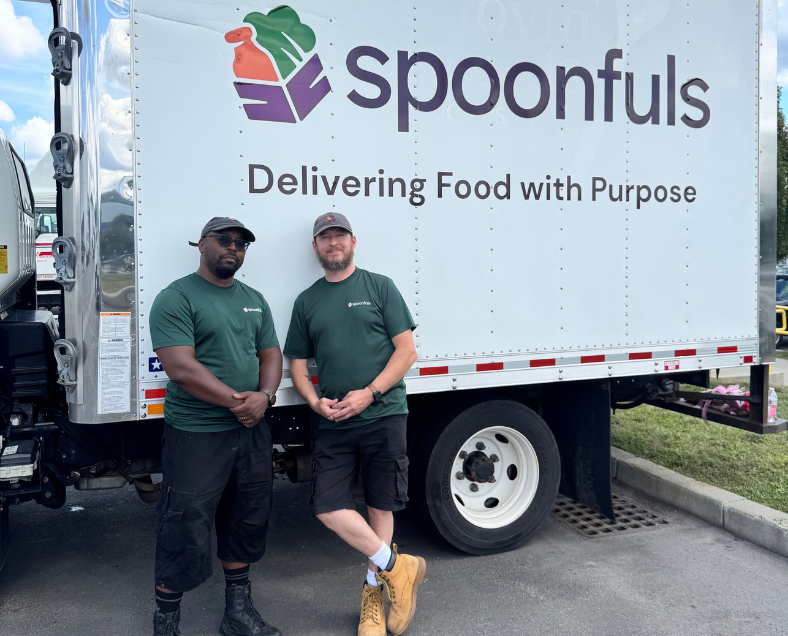
Today, meet Senior Food Recovery Coordinator, Rich Bright, and Food Recovery Coordinator, Jon Burdick, who work on our Western Massachusetts route.
What is your favorite part of the day out on the road recovering food?
Rich: My favorite part of the day is making deliveries to our community partners and being able to interact with the people at programs we serve on a daily basis. It’s great to see the impact our work has on the community
Jon: I have to agree with Rich. We both live in the area that we work in here in Western Massachusetts, so it’s great to play an important role in food access right in our own community.
You two deliver to the same partners each week and always operate as a team. What is something special about that aspect of your work?
Rich: We’re able to build strong relationships with our community partners and food donors since we see them so regularly. It assures them that we’re giving them 100% every time we show up for a pick-up or delivery.
Jon: Rich and I have gotten to know each other so well over the years that we know what to expect from each other every day. We’re very comfortable with sharing our ideas with and listening to each other.
You two really are a dynamic duo! How have you seen each other grow over the years together and become a stronger pair?
Jon: When we first started working together, I had to take a photo of Rich for our website. Rich has a military background, and he told me that he didn’t smile much. Now, I see him smile and laugh every day. It’s great to see that from him!
Rich: Ha! It’s true. Plus, we’ve gotten pretty good at (respectfully) poking holes in each other’s plans so that they’re always thought through and well-rounded.
What’s something that would surprise people about this work or you wish they could better understand?
Rich: How much people truly need what we do. Before doing this job, I’d see the occasional post about a food pantry, but doing this work really puts the scope of food insecurity into perspective, along with how much help food recovery can offer.
Jon: It also affects everyday people. I think a misconception is that only homeless people or people really down on their luck have to go to pantries, but ordinary people rely on the emergency food system.
What’s a food you’ve recovered that has a “wow factor?”
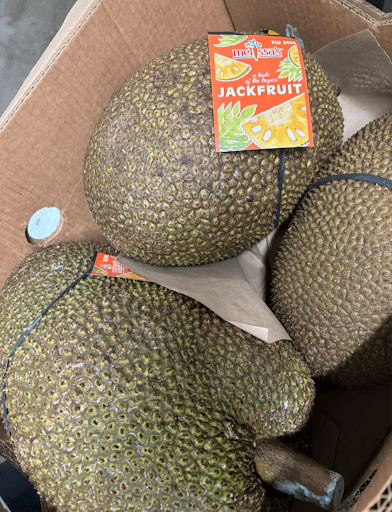
Jon: I’m always impressed when we recover a whole jackfruit. When you see it in a box, it almost looks like a small animal, and it weighs as much as one! It takes me by surprise, but it’s a very cool piece of produce.
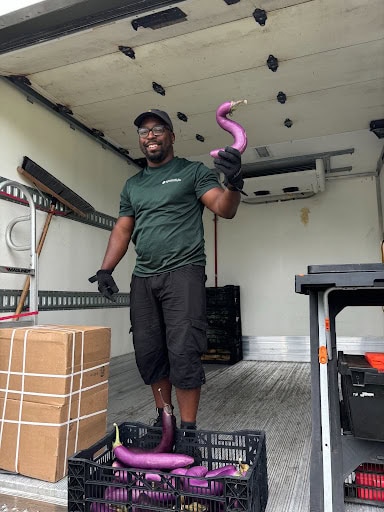
Rich: For me, it’s the interesting eggplants. Growing up, I’d see odd-shaped ones, but now I’ve even seen them in different colors that I didn’t know were possible!
How do you work to reduce wasted food in your personal life?
Rich: I do a lot more portion cooking at home to make sure I’m not wasting excess. I’ve also gotten my kids into gardening so that they feel a sense of responsibility for the food they’ve grown themselves, and so that they won’t want to see it go to waste.
Jon: My background is in the culinary world, so utilizing everything I purchase is my go-to. Things like carrot peels and chicken bones that might otherwise be wasted, I’ll use for stock. I also try to stick to a shopping list, so I’m not overbuying items I won’t be able to make use of while they’re still good to eat.