All Eyes on SNAP
Around 5 million people across the country have lost access to SNAP since the “big” bill was passed in July 2025, and Massachusetts has experienced among the steepest declines in SNAP participation anywhere in the country. According to a recent report from the Center on Budget and Policy Priorities, between July 2025 and June 2026, 17% of Massachusetts residents lost access to SNAP. The number is even higher for children with 19% losing access.
And it’s expected that even more people could be impacted. Here’s what you need to know about the issue – and where food recovery fits.
What’s behind this? What’s causing people to lose their SNAP benefits?
First: Policy changes stemming from the “big” bill (aka H.R.1) that was enacted back in 2025. Among other things, it involves cuts to federal funding for nutrition programs, shifting costs to states that can’t afford them, and new SNAP eligibility requirements.
Here’s the implementation progression it laid out:
- Throughout 2025: Rolling out new work requirements and time limits on receipt of benefits, plus restrictions on non-citizen eligibility for SNAP;
- Oct. 1, 2026: Shifting administrative costs historically covered by the federal government to the states to 75% (up from 50%) for operating SNAP; and
- Oct. 1, 2027: Shifting benefits costs, again historically covered by the federal government, to states (from nothing to up to 15% of their total SNAP benefit costs).
Massachusetts may not be able to make up the difference. By the math, our state is looking at roughly $53 million in new administrative expenses per year (beginning in 2026) and, depending on our state’s “error rate,” between $106 million to $319 million annually in program costs, beginning as soon as 2027.
These SNAP cuts are hitting a food system already weakened by other policy changes. To name just a few significant blows, in 2025 alone, the USDA slashed funding for emergency food resources, the Household Food Security report was suspended, and the government shut down for 43-days causing a complete lapse in the administration of SNAP benefits. You can read about even more on our Breaking Through the Noise blog.
Another critical factor at play in Massachusetts: DTA case worker shortages. In June 2026, WBUR reported that 85% of DTA calls were being dropped, making it challenging for people both to get approved for and renewed to receive SNAP benefits, even if they qualify under the new requirements.
Case worker shortages in Massachusetts pre-date the “big” bill, however there are at least two circumstances compounding the shortage:
- The “big” bill implemented more stringent eligibility criteria for SNAP users and applicants that complicate the benefits application and recertification process for case workers and clients. This places a greater burden on case workers to address client needs.
- In July 2026, Massachusetts passed a state budget that did not include enough funding for the existing number of caseworkers, nevermind an increase. Advocates are asking Governor Healey to support more funding for the immediate hiring of more DTA caseworkers.
In practice, the more hurdles to SNAP eligibility and access, the more likely people are to forego benefits altogether. In Massachusetts, more people have lost access to SNAP than the national average since the “big” bill’s enactment (17% compared to 12%).
Why is SNAP so important?
SNAP is a critical component of our safety net and our nation’s #1 anti-hunger program. For every meal a food pantry provides, SNAP provides nine. With SNAP, people have the option to buy more of what they need to prepare meals. Think: Gluten free food, which is harder to find at pantries, for a person with celiac disease.
Impeding SNAP eligibility and access means more of our neighbors will be forced to rely on food pantries and meal programs, putting additional strain on an emergency food system already stretched thin.
What is it like for people trying to access SNAP right now?
We recommend listening to “Arizona’s Food Stamp Crisis Is Coming for the Rest of the U.S.,” by the New York Times’ Daily podcast. Arizona has implemented the changes from the “big” bill faster than any other state. It shares real examples of what applying for SNAP among case worker shortages can look like and is forecasting for other states what to expect.
How is the current state of SNAP impacting Spoonfuls and its partners?
Before any of these funding shifts were implemented, the Greater Boston Food Bank found that two in five Massachusetts’ households were experiencing food insecurity. Food programs in our network are fielding increased consumer demand for food access support, which is sometimes outpacing available food donations from traditional sources. This means those same food programs are increasingly turning to food recovery organizations like Spoonfuls to stock up on the things they need to meet a growing demand.
We expect pantries will continue to see a high volume of people in need in 2026, particularly as the DTA continues to grapple with a case worker shortage, resulting in dropped calls and processing delays for SNAP applicants and beneficiaries. As a result, we also expect that Spoonfuls will continue to see new inquiries and requests for additional food from existing partners as more people confront a critical need for food.
How is Spoonfuls responding?
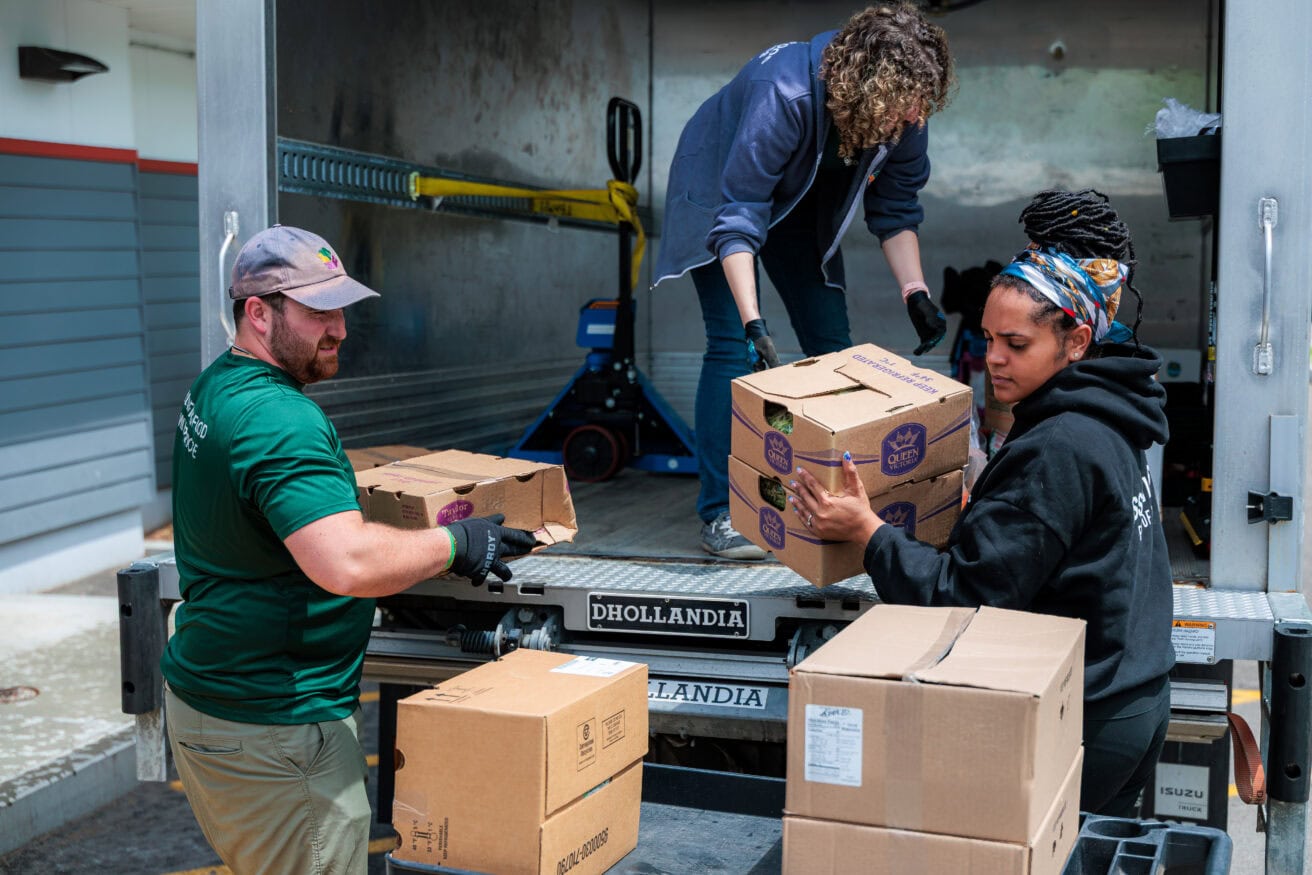
We’re doing as we’ve always done: Maximizing existing sources of food to feed people and scaling, where and when it makes sense, to better meet the needs of communities across Massachusetts (and, eventually, beyond). Good food continues to be wasted at high volumes, and we’re committed to recovering as much of it as we can, before it enters the waste stream, for our neighbors who need it.
Plus, we’re actively engaging in community and coalition spaces focused on reducing wasted food and fighting food insecurity.
In this way, we’re working to meet both the needs of right now and identifying and building a base of support for policy-driven solutions to wasted food, food insecurity, and the climate emergency.
Wondering more about how Spoonfuls’ fits in, during a crisis and everyday? Learn more in this blog.
What can I do to help?
- Donate. We are the safety net for our safety net! With more people turning to our partners in the emergency food system for support, our partners are turning to us to do more to help them meet a growing need.
- Make a financial contribution.
- Encourage food donors, retail grocers, wholesalers, farms, markets, school and corporate cafeterias, and big event venues, to talk to us about donating their excess food.
- Support your local pantry. While Spoonfuls is distributing food to over 250 organizations across Massachusetts, we can’t do it alone. Many pantries require multiple food donation sources on top of financial donations in order to meet the needs of their community. Giving to pantries directly is another critical way you can support the emergency food system right now.
- Speak out! Sign up for Spoonfuls’ Advocacy Alerts to stay up to date on the latest advocacy opportunities.
Donate Today
A gift today helps ensure Spoonfuls can continue to act as a saftey net for the community programs that our neighbors facing food insecurity rely on.