People of Spoonfuls: Steven Lomax, Food Recovery Coordinator
Food recovery doesn’t happen in isolation. It takes a community of food donors, community-based organizations, funders, and committed food recovery staff to help make the most of food while it’s still good to eat and get it to those who could use it. In “People of Spoonfuls,” we introduce you to the many people who help make our food recovery work possible!
To kick off 2026, we connected with one of Spoonfuls’ Food Recovery Coordinators, Steven Lomax.
Tell us a bit about your role as a Food Recovery Coordinator. What does your day look like?
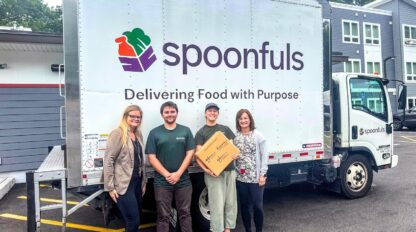
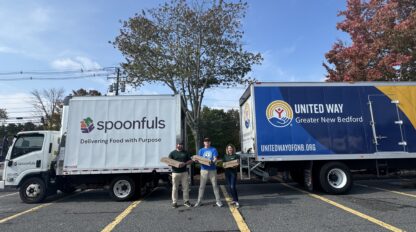
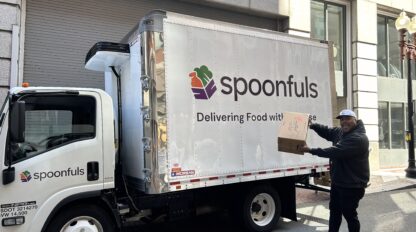
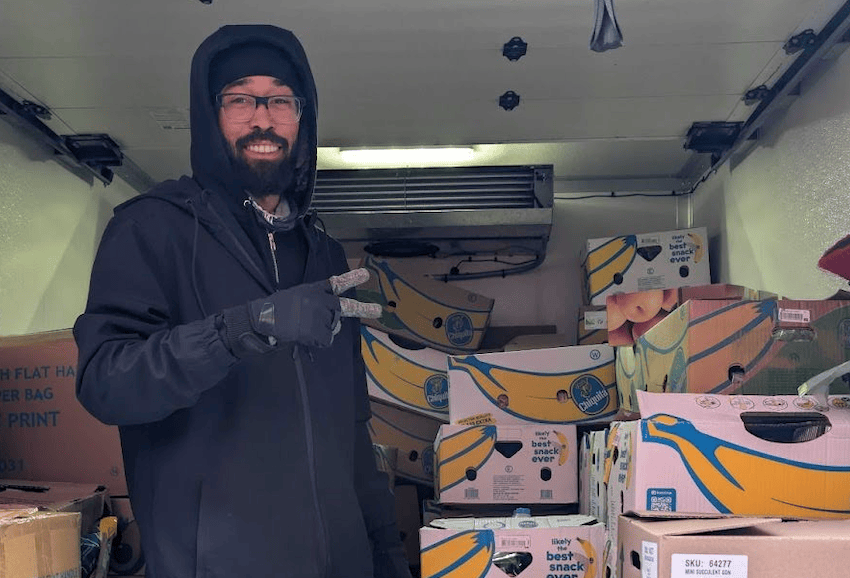
Each day, my teammates and I hop in Spoonfuls’ box trucks and visit supermarkets across Massachusetts, where we’re recovering food of all different types: meat, produce, dairy – anything you can think of that’s still safe to eat. Once we load up the truck, we then visit community organizations, like food pantries and other meal programs. We drop off the recovered food and put it in the hands of those organizations, who then help distribute it to people in our community who need it the most.
What qualities have you developed since you started working at Spoonfuls?
In my time as a Food Recovery Coordinator, I’ve become much more mindful of my own food waste. Beyond that, it’s helped me realize what a community effort food recovery can be. It doesn’t just take our staff, like me, being on the road. It takes food donors who are thoughtful about the items they share with us, community organizations recognizing the needs of their clients and communicating them effectively, and funders who give their time and dollars to ensure our work can continue to happen.
What has been your biggest “aha” moment at Spoonfuls regarding the impact of food recovery?
My biggest “aha” moment has been the generosity of the volunteers we encounter at community organizations. There are a lot of people who selflessly volunteer their time to support food pantries and meal programs out of the kindness of their hearts. When you see those people giving back daily, you realize there is an entire network of people dedicating their lives to fighting hunger and food waste.
An example: A few weeks ago, I was at Friday Night Supper Program, a meal program in Boston that serves weekly dinners to anyone in need, where we regularly distribute recovered food. I was talking with Father John, who helps manage the organization. He shared something with me that blew my mind: Since 1984, when the program opened, it has only been closed twice. Stories like that speak volumes about the dedication people have to nourishing their community.
What do you think would surprise others most about the food recovery work Spoonfuls does?
I think the biggest surprise would be the types of food we recover. When you think about food pantries or [food] recovery, you may be thinking about cans of green beans that have been sitting on a shelf, some cereal, or maybe some other shelf-stable items. The reality is, every single item you see in a grocery store is an item that can be recovered and put in the hands of someone who not only could use it, but may really need it.
The quantity is equally impressive, too. There are days we pick up 5,500 pounds of food, and within three hours, all of that food is going to either be in people’s homes or with the organizations that help get it to people’s homes. When you multiply that out by the number of trucks we have, the amount of high-quality food we’re recovering and distributing on a regular basis is just mindblowing.
Who on Team Spoonfuls or someone in our food recovery network inspires you?
It would have to be my guy, Andrew! Andrew, a fellow Food Recovery Coordinator, is one of the purest-hearted people I’ve ever met. You can tell that the work he does is not just coming from the standpoint of needing a job and getting a check. He is thoroughly invested in uplifting his community. If you’re ever on the road with Andrew, you can see from the interactions he has with both store staff and with community partners that he is a kind soul and loves the work we’re doing.
Another person who inspires me is Mr. Miller, the Coordinator at Healthy Baby, Healthy Child in Mattapan. He assists not only in running the food pantry, but an adult care center for adults with disabilities. With a line of families waiting for food at their pantry, he effortlessly facilitates the involvement of the adults he cares for in unloading the food we are distributing. When someone has their heart in the right place as he does, it’s truly inspiring.
What does “delivering food with purpose” mean to you?
Delivering food with purpose has two meanings to me. The first: Getting food into the hands of those who need it most in our community. Second: Reducing food waste and keeping perfectly good food out of the waste stream. The reality is, we’re all impacted by wasted food, and we can all do our part to minimize food waste and food insecurity.
What’s your favorite way to reduce food waste?
In my household, we eat our leftovers! And, if there are things we don’t want to eat, we have plenty of family with whom we can share. Just say, “Hey, I’m dropping something off to you, Mom!” If you notice you’re not going to use something, why wait for it to go to waste? Give it to someone you know could use it in your own circle.
You work with food all day in your role. What’s your favorite to eat?
You can’t go wrong with a homemade bacon cheeseburger! Some crispy bacon, a perfect bun, some lettuce, and pickles. Keep it simple!